
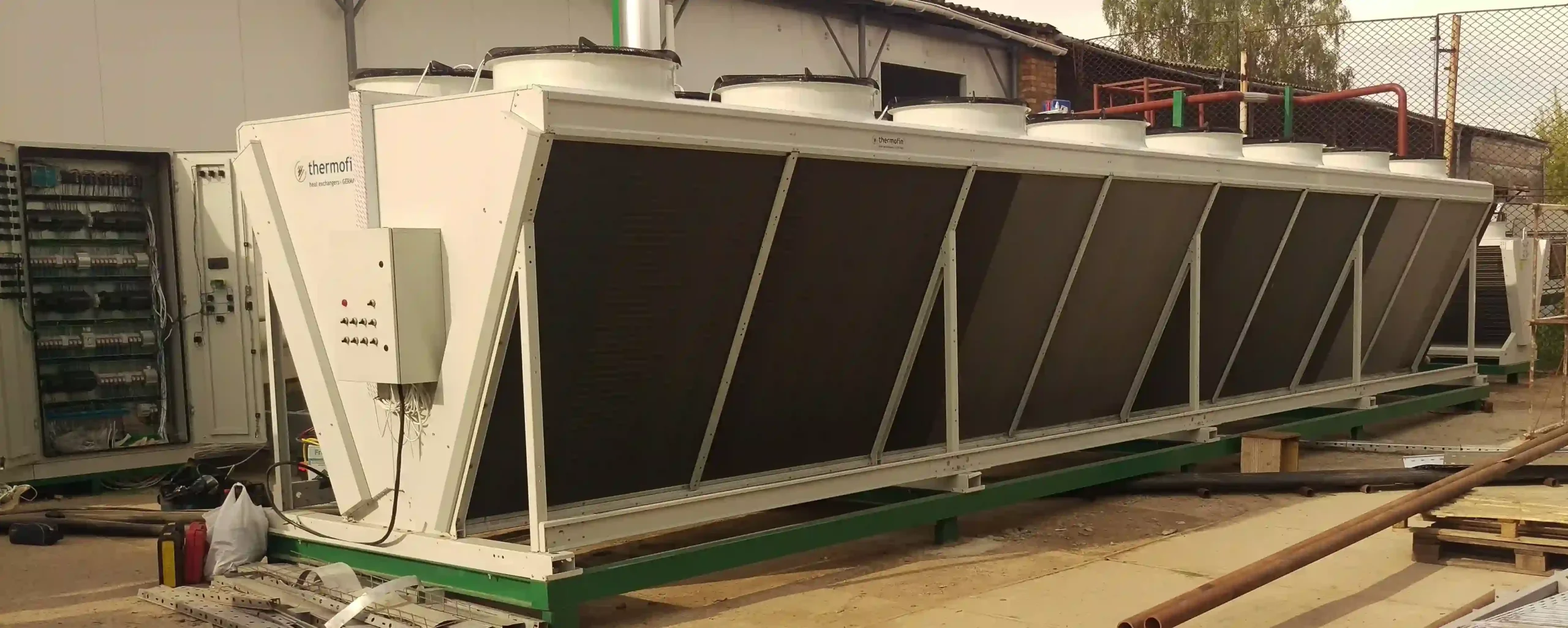
Industrial chillers are a critical component of modern cooling infrastructure for manufacturing facilities, logistics centers, food processing plants, pharmaceutical production, data centers and commercial buildings. These systems provide reliable heat removal from industrial processes, HVAC equipment and production machinery, ensuring stable operating temperatures regardless of environmental conditions.
Understanding how industrial chillers work and what influences their cost is essential when planning a new cooling installation or upgrading an existing system.
What Is an Industrial Chiller?
An industrial chiller is a refrigeration system designed to cool water, glycol solutions or other heat-transfer fluids used in industrial processes, HVAC systems, fan coil units, heat exchangers and production equipment.
Unlike residential air conditioning systems, industrial chillers are engineered to handle significant thermal loads and operate continuously in demanding environments, often running 24 hours a day throughout the year.
Where Are Industrial Chillers Used?
- Food and beverage processing facilities
- Meat and dairy production plants
- Pharmaceutical manufacturing
- Cold storage warehouses and logistics hubs
- Data centers and server rooms
- Commercial HVAC systems
- Plastic and polymer production
- Metalworking and industrial manufacturing facilities
How Does an Industrial Chiller Work?
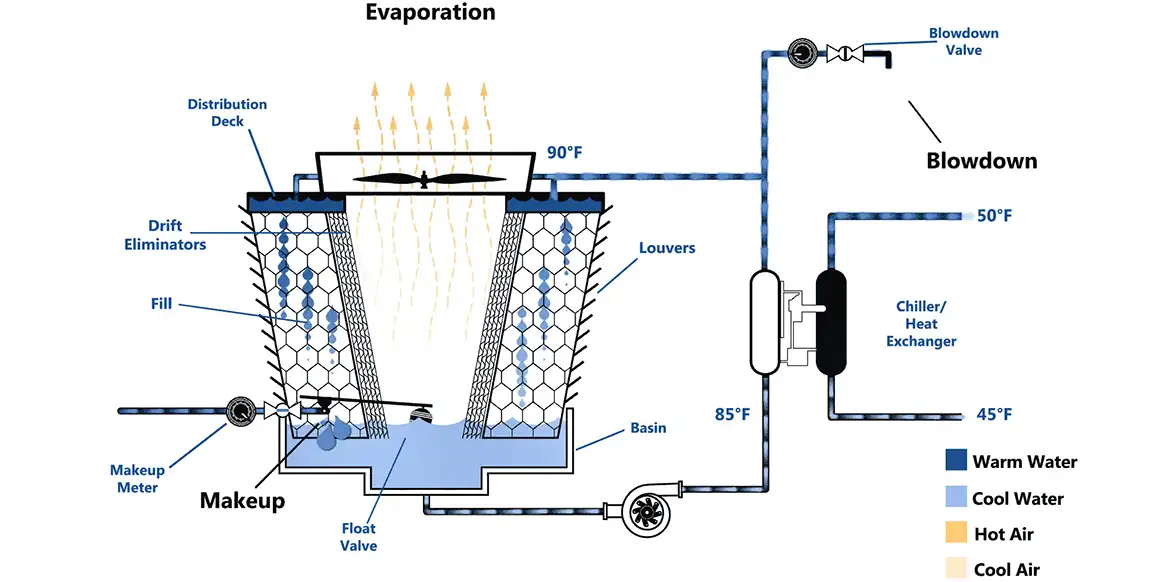
An industrial chiller operates using a refrigeration cycle. The refrigerant circulates through four primary components: the compressor, condenser, expansion valve and evaporator. During this process, heat is extracted from the cooling medium and transferred away from the system.
The chilled water or glycol solution is then distributed through a piping network to process equipment, air handling units or production lines. Once the fluid absorbs heat, it returns to the chiller where the cooling cycle begins again.
Main Types of Industrial Chillers
Air-Cooled Chillers
Air-cooled chillers are among the most widely used industrial cooling solutions. Heat is rejected directly to the atmosphere through condenser coils and fans.
Key advantages include:
- Simpler installation process
- Lower initial capital investment
- Reduced maintenance requirements
- No cooling tower required
Water-Cooled Chillers
Water-cooled chillers use cooling towers, dry coolers or alternative heat rejection systems to dissipate heat.
Key advantages include:
- Higher energy efficiency
- Excellent performance under heavy cooling loads
- Lower operating costs for large-scale facilities
- Improved long-term energy savings
What Factors Influence Industrial Chiller Costs?
1. Cooling Capacity
Cooling capacity is one of the most significant factors affecting the overall cost of an industrial chiller. Larger systems require more powerful compressors, larger heat exchangers and additional control equipment.
2. Compressor Technology
The type of compressor significantly impacts both performance and investment costs. Scroll, screw and centrifugal compressors are designed for different applications and cooling capacities.
3. Refrigerant Selection
Modern industrial cooling systems increasingly utilize environmentally responsible refrigerants and low-GWP technologies. Natural refrigerants such as CO₂ (R744) are becoming increasingly popular due to their compliance with European environmental regulations and sustainability objectives.
4. Automation and Control Systems
Integration with advanced automation platforms such as Carel controllers, Building Management Systems (BMS) and SCADA solutions enables real-time monitoring, intelligent control and reduced operating expenses.
Smart control strategies can significantly improve system performance and energy efficiency throughout the equipment lifecycle.
5. Heat Recovery Capabilities
Many modern chillers can recover waste heat generated during the cooling process and reuse it for domestic hot water production, process heating or space heating applications.
This approach improves overall system efficiency and reduces energy consumption across the facility.
How to Select the Right Chiller for Your Facility
Choosing an industrial chiller involves more than simply determining the required cooling capacity. Engineers must evaluate process requirements, operating temperatures, future expansion plans, energy efficiency targets and automation needs.
A professional engineering assessment helps ensure that the selected cooling solution delivers reliable performance while minimizing long-term operating costs.
Why Energy Efficiency Matters
For many industrial facilities, electricity consumption represents a substantial portion of operational expenses. Modern chillers equipped with inverter-driven compressors, variable-speed fans and intelligent control systems can significantly reduce energy usage compared to conventional equipment.
An energy-efficient cooling system not only lowers utility bills but also contributes to sustainability goals and reduced carbon emissions.
Conclusion
Industrial chillers are a strategic investment for businesses that rely on reliable process cooling, industrial refrigeration or HVAC systems. Equipment costs are influenced by cooling capacity, compressor technology, refrigerant choice, automation features and energy efficiency requirements.
Koriel Group provides engineering, design, installation and automation services for industrial cooling systems, helping manufacturers, logistics operators and commercial facilities achieve reliable performance, lower operating costs and long-term energy efficiency.