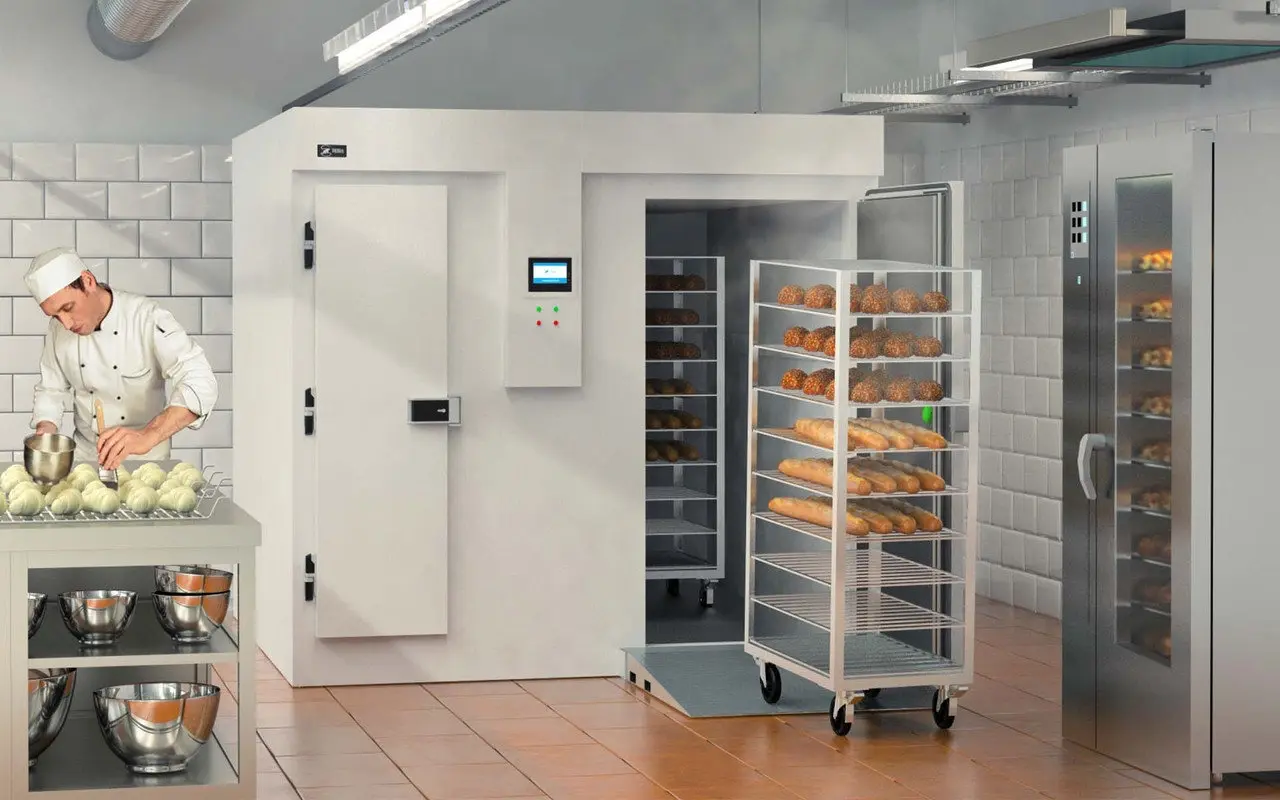
Once you’ve determined the required cold room volume, temperature regime, and layout, the next critical step is choosing the right refrigeration equipment. This choice directly affects temperature stability, system energy efficiency, running costs, and how long the equipment will last.
Modern solutions for HoReCa businesses make it possible to build reliable refrigeration systems that keep products safely stored and meet the highest standards for quality and energy efficiency.
Monoblock or Split System: Which Should You Choose?
One of the first questions when designing a cold room is what type of refrigeration unit to use. The two most common options are monoblock units and split systems.
Monoblock Units
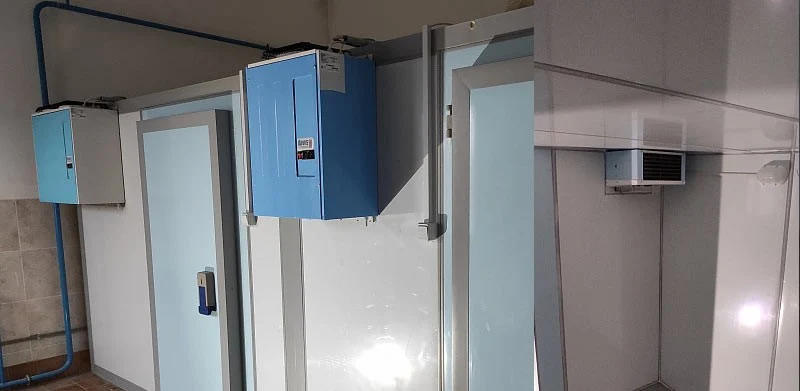
A monoblock is a compact unit that houses all the main components of the refrigeration cycle in a single enclosure.
Key advantages:
- simple installation;
- lower installation cost;
- minimal maintenance requirements;
- an optimal choice for smaller cold rooms.
These systems work well for cafés, small restaurants, shops, and businesses with modest turnover.
Split Systems
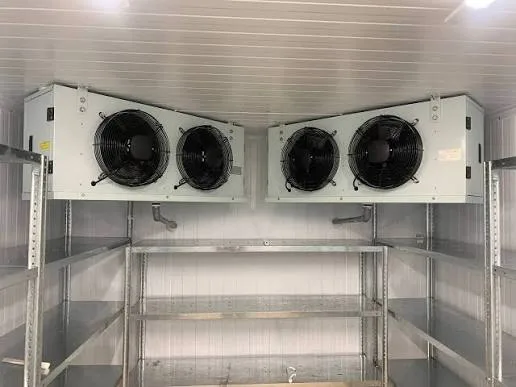
In split systems, the compressor-condenser unit is installed separately from the evaporator. This significantly cuts noise inside the building and allows heat to be dissipated more efficiently.
Key advantages:
- higher cooling capacity;
- lower noise levels;
- can be serviced without shutting down kitchen operations;
- suited to medium and large cold rooms.
For most restaurants with larger cold storage spaces, split systems turn out to be the more efficient choice.
How to Correctly Calculate Cooling Capacity
One of the most common mistakes is sizing a refrigeration unit based on room volume alone. In practice, engineers run a full thermal engineering calculation that factors in far more variables than that.
The calculation takes into account:
- the dimensions of the cold room;
- the thickness of the insulation;
- the ambient temperature;
- how often the doors are opened;
- the volume of product loaded at any one time;
- heat given off by lighting;
- heat given off by staff;
- any additional equipment running inside the room.
Undersized cooling capacity forces the compressor to run constantly at maximum load, while oversizing it drives up the initial investment and can actually hurt temperature stability.
Managing Air Circulation
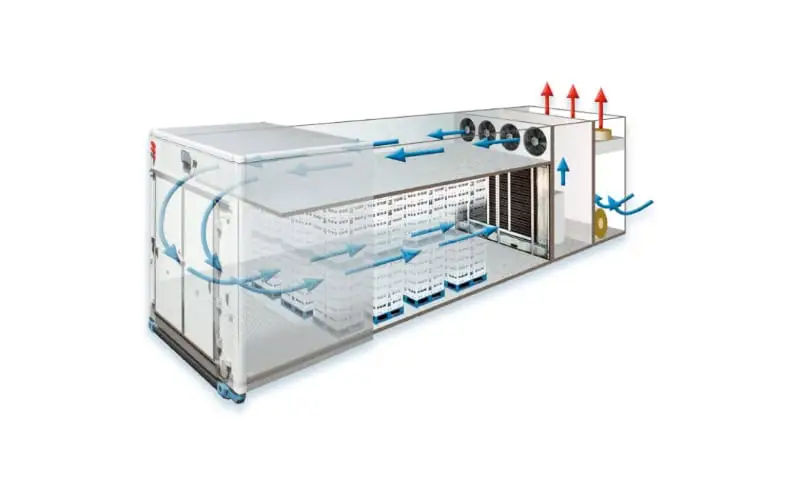
Even the most advanced refrigeration equipment won’t cool properly if airflow inside the room isn’t set up correctly.
It’s important to ensure:
- free air circulation between shelving units;
- correct evaporator placement;
- no obstructions blocking airflow;
- even temperature distribution throughout the space.
Product shouldn’t be pressed directly against the evaporator or the walls of the room. Doing so hampers heat exchange and can lead to uneven cooling.
Energy Efficiency in Refrigeration Systems
Electricity costs keep rising, which makes energy efficiency one of the deciding factors when selecting industrial refrigeration equipment.
To cut running costs, it’s worth using:
- compressors with a high efficiency rating;
- electronic expansion valves;
- variable-frequency control for compressors and fans;
- LED lighting inside the rooms;
- automated defrost cycle management;
- temperature monitoring systems.
A well-designed system can cut energy consumption significantly compared with standard, non-automated setups.
Automating Cold Rooms
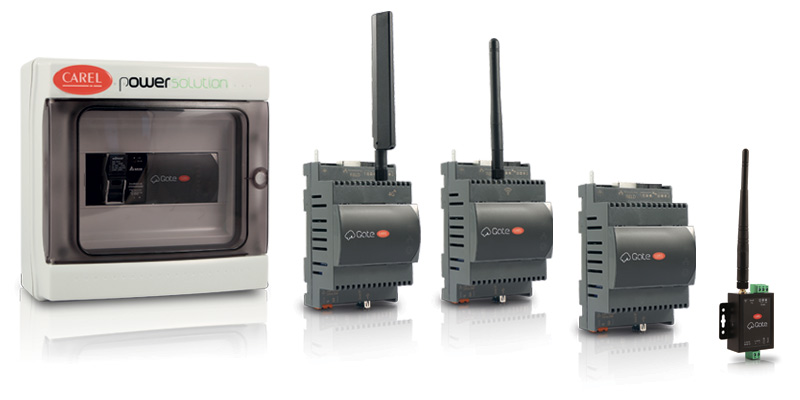
Modern automation systems keep temperatures stable, track how the equipment is running, and flag alarm conditions right away.
This relies on dedicated controllers, temperature sensors, and dispatch/monitoring systems.
Automation makes it possible to:
- reduce energy consumption;
- keep a temperature log;
- manage defrost cycles;
- get alerts about malfunctions;
- monitor equipment remotely.
These solutions matter most for restaurants, supermarkets, and food industry businesses, where even a brief temperature swing can lead to serious financial losses.
Common Mistakes When Building Cold Rooms
Even high-quality equipment can’t make up for mistakes made at the design or installation stage.
The most frequent mistakes include:
- incorrect cooling capacity calculations;
- insufficient insulation thickness;
- using low-quality sandwich panels;
- poor evaporator placement;
- no reserve cooling capacity built in;
- ignoring heat gain through doors;
- skipping system automation.
In most cases, fixing these mistakes after the facility is already up and running costs far more than proper engineering would have at the outset.
Why Trust Koriel Group with the Design?
Koriel Group’s specialists handle end-to-end design of industrial refrigeration systems for restaurants, cafés, shops, food production facilities, and other HoReCa businesses.
The company covers the full project lifecycle:
- analyzing the client’s needs;
- developing the engineering solution;
- selecting the refrigeration equipment;
- supplying the components;
- installation and commissioning;
- warranty and post-warranty service and maintenance.
This end-to-end approach gives the client a refrigeration system that meets today’s standards for reliability, energy efficiency, and safe product storage.
Conclusion
Building a cold room is an investment that directly shapes product quality, staff efficiency, and running costs. Choosing the right equipment, calculating cooling capacity precisely, using quality insulation, and adding modern automation together produce a system that will keep running reliably for years.
If you’re planning to build a new cold room or upgrade an existing refrigeration system, reach out to the specialists at Koriel Group. We’ll help you find the right technical solution for your business and ensure your products are stored efficiently under any operating conditions.