
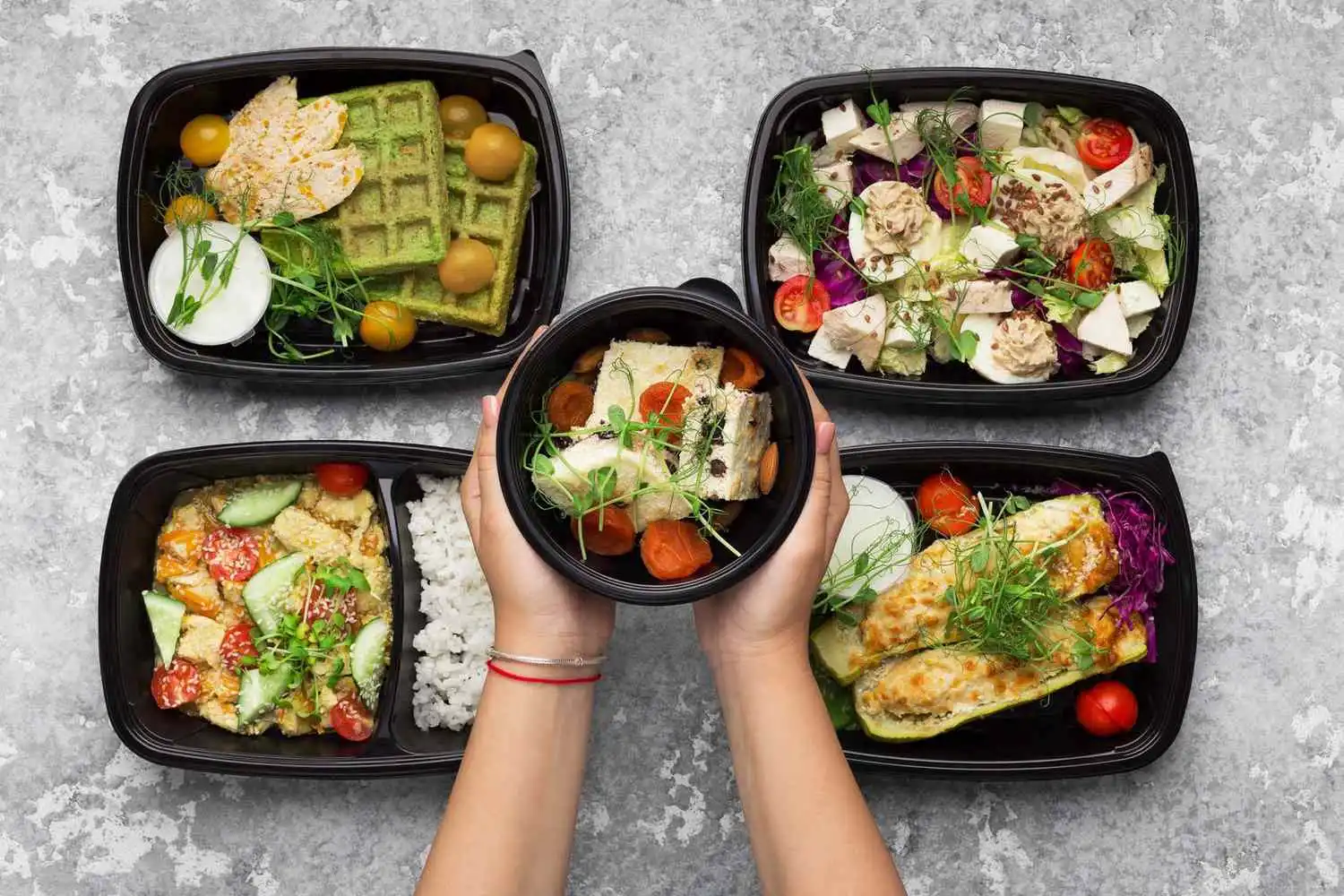
Producing ready meals and prepared food products is one of the most demanding areas of the food industry when it comes to refrigeration technology. Unlike raw ingredients, a ready meal has already been through thermal processing and has a complex structure — sauce, garnish, protein component — making it far more sensitive to improper freezing. A mistake at the blast freezing stage is immediately noticeable to the consumer: excess liquid after thawing, a changed texture, or a dulled flavor.
In this article, we break down why this happens on a physical level, which process parameters actually determine the flavor and juiciness of a ready meal, and what to look for when choosing and configuring blast freezing equipment.
Why Ready Meals Lose Flavor and Juiciness During Freezing
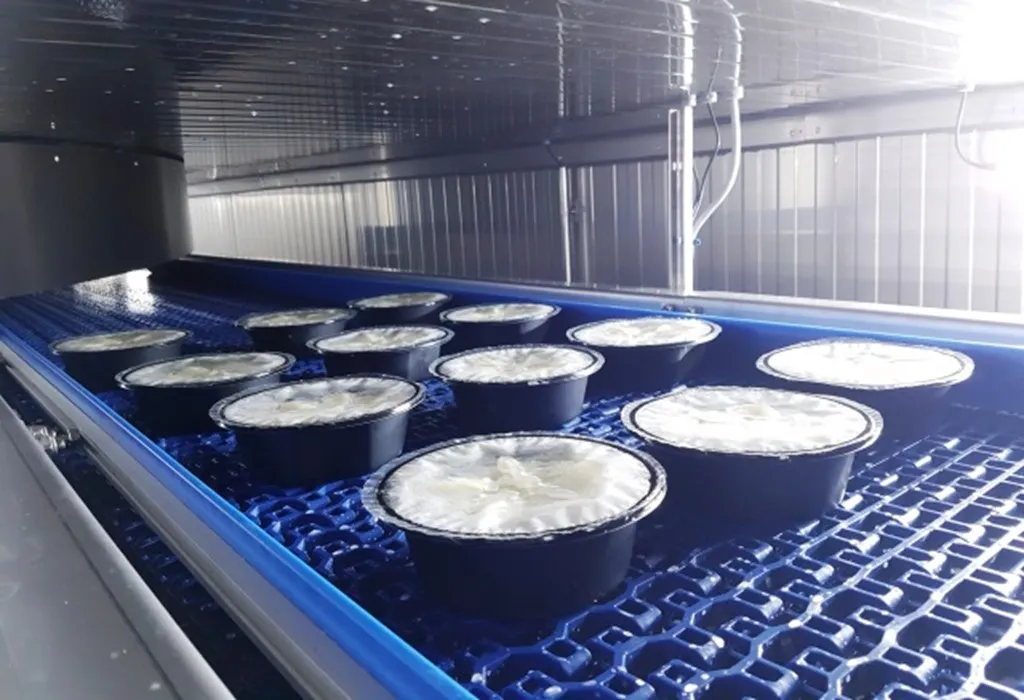
Flavor and texture in a ready meal come down to the state of its cellular and protein structure. Freezing itself doesn’t «damage» the product — an incorrect freezing speed and temperature profile through the critical zone does.
Ice Crystal Size
The slower the heat removal, the larger the ice crystals that form inside the product’s moisture. Large crystals mechanically rupture cell walls and the protein structure of sauces and fillings, and after thawing, that moisture escapes as drip loss — carrying dissolved aromatic and flavor compounds with it.
Loss of Volatile Aromatic Compounds
Ready meals often contain spices, herbs, or cream- and wine-based sauces — sources of volatile aromatic compounds. Slow freezing followed by unstable storage causes these compounds to partially evaporate or migrate into the packaging, leaving the reheated meal tasting «flat.»
Fat and Protein Oxidation
Cream- or meat-based sauces, along with high-fat fillings, are sensitive to oxidation during temperature fluctuations. Every partial thaw-and-refreeze cycle — caused, for example, by an unstable freezer or logistics chain — accelerates this process and produces a «stale» aftertaste.
Key Process Parameters That Determine the Result
Time Through the Critical Zone
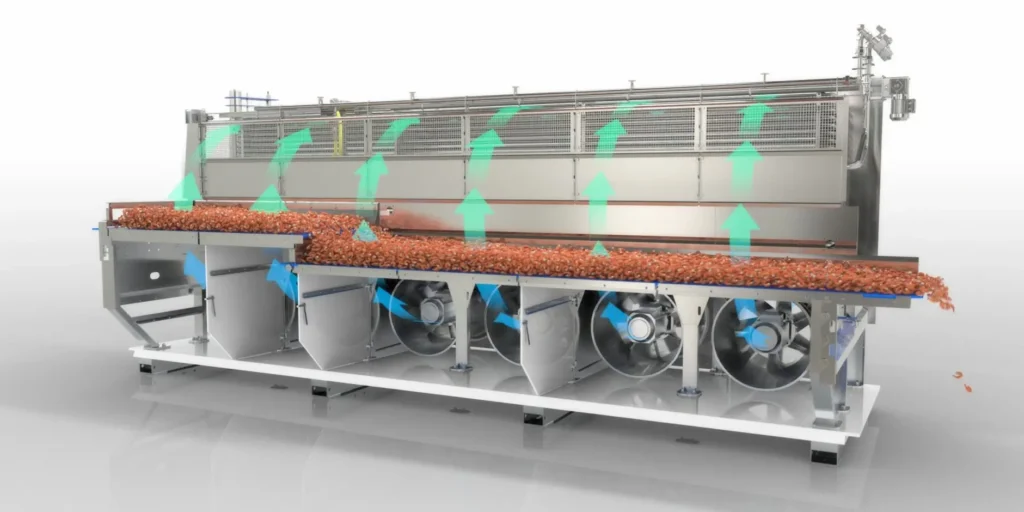
The most important parameter is how long it takes the product’s geometric core temperature to pass through the −1°C to −5°C zone, where most ice crystallization occurs. The shorter this window, the smaller the crystals — and the less mechanical damage to the meal’s structure.
Temperature Stability and Airflow Uniformity
Uneven airflow creates «warm spots» on the trays, where product freezes more slowly than neighboring portions — resulting in an inconsistent batch, even when the chamber’s average readings look normal.
Initial Product Temperature
A meal should go into the blast freezer immediately after cooling to the technologically acceptable temperature, without sitting at room temperature — every extra minute at a warmer temperature extends the time spent in the critical zone.
Packaging
Airtight, barrier packaging reduces the product’s contact with oxygen and moisture exchange with the storage chamber environment — this directly affects how well the meal retains its flavor over weeks or months of storage.
Chamber Loading Density
Overloaded trays and overly tight portion spacing impair airflow around each unit of product, extending freezing time and negating the benefits of even the most powerful equipment.
Blast Freezing vs. Slow Freezing: The Difference in Practice
| Slow Freezing (general-purpose freezer) | Blast Freezing |
|---|---|
| Large ice crystals, structural damage | Fine-crystal structure, texture preserved |
| Significant drip loss after thawing | Minimal drip loss, meal stays juicy |
| Loss of aromatic compounds | Flavor and aroma close to freshly cooked |
| Long time in the critical temperature zone (hours) | Critical zone passed within minutes |
| Inconsistent batch quality | Uniform result across the whole batch |
Practical Recommendations for Ready Meal Production
| Before Loading the Freezer | During Freezing |
|---|---|
| Cool the meal to its acceptable initial temperature immediately after cooking | Use the maximum airflow setting the product can tolerate |
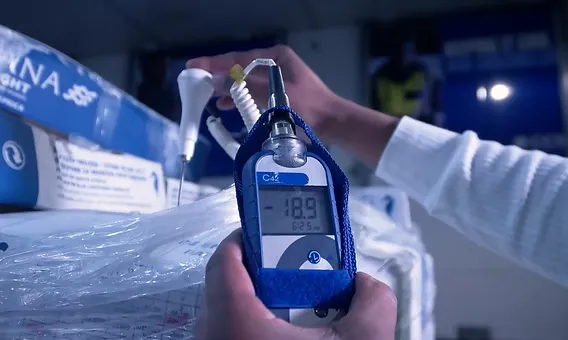
| Space portions evenly, avoiding tightly packed trays | Monitor core temperature with probes, not just chamber air temperature |
| Check packaging integrity before loading | Follow the manufacturer’s recommended tray spacing for free air circulation |
After freezing, the product should be moved to a storage chamber with a stable temperature regime as quickly as
possible, with no frequent evaporator defrost cycles — these micro thaw-refreeze cycles are the most common cause of
an «off» aftertaste in industrially frozen ready meals.
Signs That Your Freezing Process Is Set Up Incorrectly
- a noticeable amount of liquid at the bottom of the pack after thawing;
- the sauce or filling texture has become watery or has separated;
- batch quality is inconsistent — some portions are fine, others are not;
- a faint «stale fat» aftertaste, or spice notes that seem to have disappeared;
- frost or an ice crust forming on the product inside the package;
- freezing time significantly exceeds the equipment’s rated performance.
Common Mistakes When Implementing Blast Freezing for Ready Meals
- choosing a freezer chamber «by eye,» without calculating the batch’s actual heat load;
- loading product while it’s still warm, without pre-cooling;
- overly dense tray loading to save time during a shift;
- monitoring only chamber air temperature instead of the product’s core temperature;
- using packaging that isn’t designed for airtightness during freezing;
- irregular maintenance, leading to unstable defrost cycles.
Most of these mistakes can be avoided at the design stage — by correctly sizing the freezing chamber and configuring airflow ducting and automation for your specific range of ready meals.
Why Choose Koriel Group?
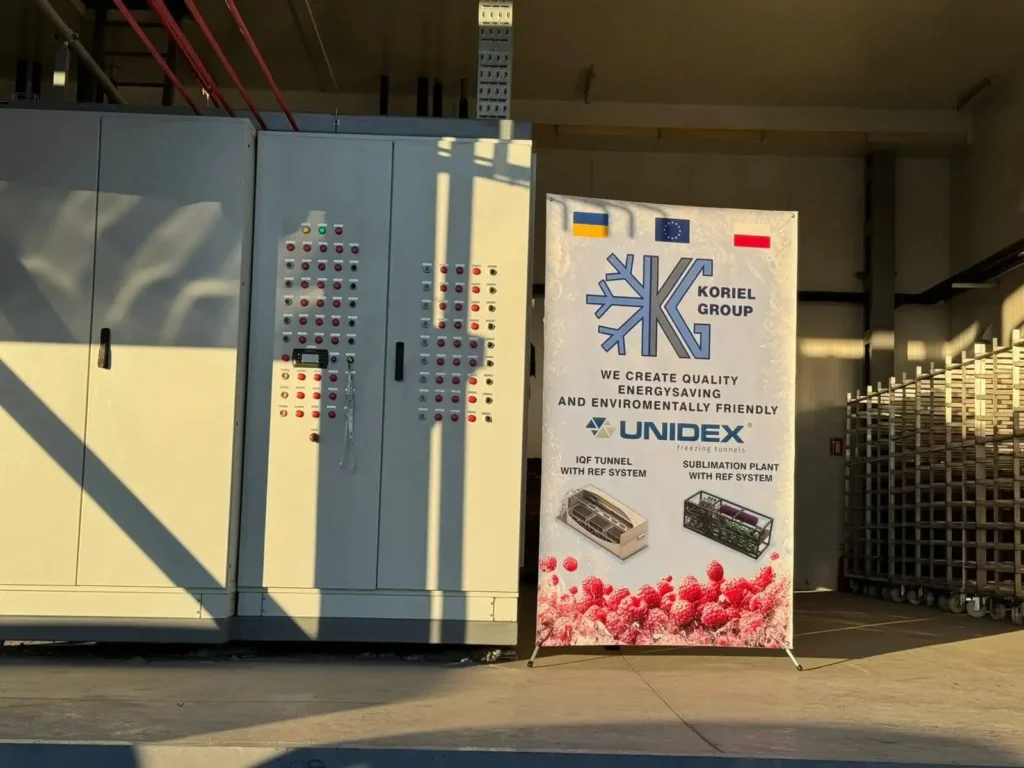
Koriel Group specializes in complete industrial freezing solutions, including blast freezer tunnels, IQF systems, and refrigeration automation. We size and configure equipment around your specific product range and output volumes — not a one-size-fits-all setup.
We offer:
- design and calculation of blast freezing chambers based on the actual heat load of your product;
- airflow system design and ducting configuration for uniform batch freezing;
- automation setup with core
temperature monitoring and freezing cycle logging; - installation, commissioning, and staff training on the equipment;
- scheduled maintenance of blast freezing chambers for
reliable year-round operation; - solutions on modern refrigerants, including CO₂ (R744), for energy-efficient and environmentally friendly freezing
systems.
A complete approach — from capacity calculation to ongoing service — helps ready meal producers achieve consistently high product quality batch after batch, without unexpected losses in flavor or texture.
Conclusion
Flavor and juiciness loss in ready meals after freezing is almost always the result of slow passage through the critical temperature zone, uneven airflow, or improper packaging — not an unavoidable side effect of freezing itself. A properly designed and configured blast freezing system preserves a product’s structure, aroma, and flavor at a level close to freshly cooked.
If you’re planning to launch or upgrade a freezing line for ready meals and prepared food products, get in touch with Koriel Group — we’ll help you select the right equipment for your product range and process, from capacity calculation through to ongoing maintenance.